
Gut Testing
Your gut symptoms are real and they deserve answers.
Bloating, constipation, diarrhea, reflux, food sensitivities, skin flares, fatigue, brain fog, and hormone imbalances can all be signs that something deeper is happening in the gut.
Instead of guessing which supplement, probiotic, or diet change you need, comprehensive gut testing helps us understand what’s actually going on beneath the surface.

Why Gut Testing Matters
The gut is connected to digestion, nutrient absorption, immune function, inflammation, detoxification, hormone metabolism, skin health, and even mood. When the gut is out of balance, symptoms can show up far beyond the digestive tract.
Gut testing allows us to identify patterns such as:
Imbalances in beneficial bacteria
Overgrowth of opportunistic or inflammatory microbes
Parasites, yeast, or bacterial pathogens
H. pylori and related virulence factors
Poor digestion or absorption
Gut inflammation
Low immune defense in the gut
Why I use the GI-MAP
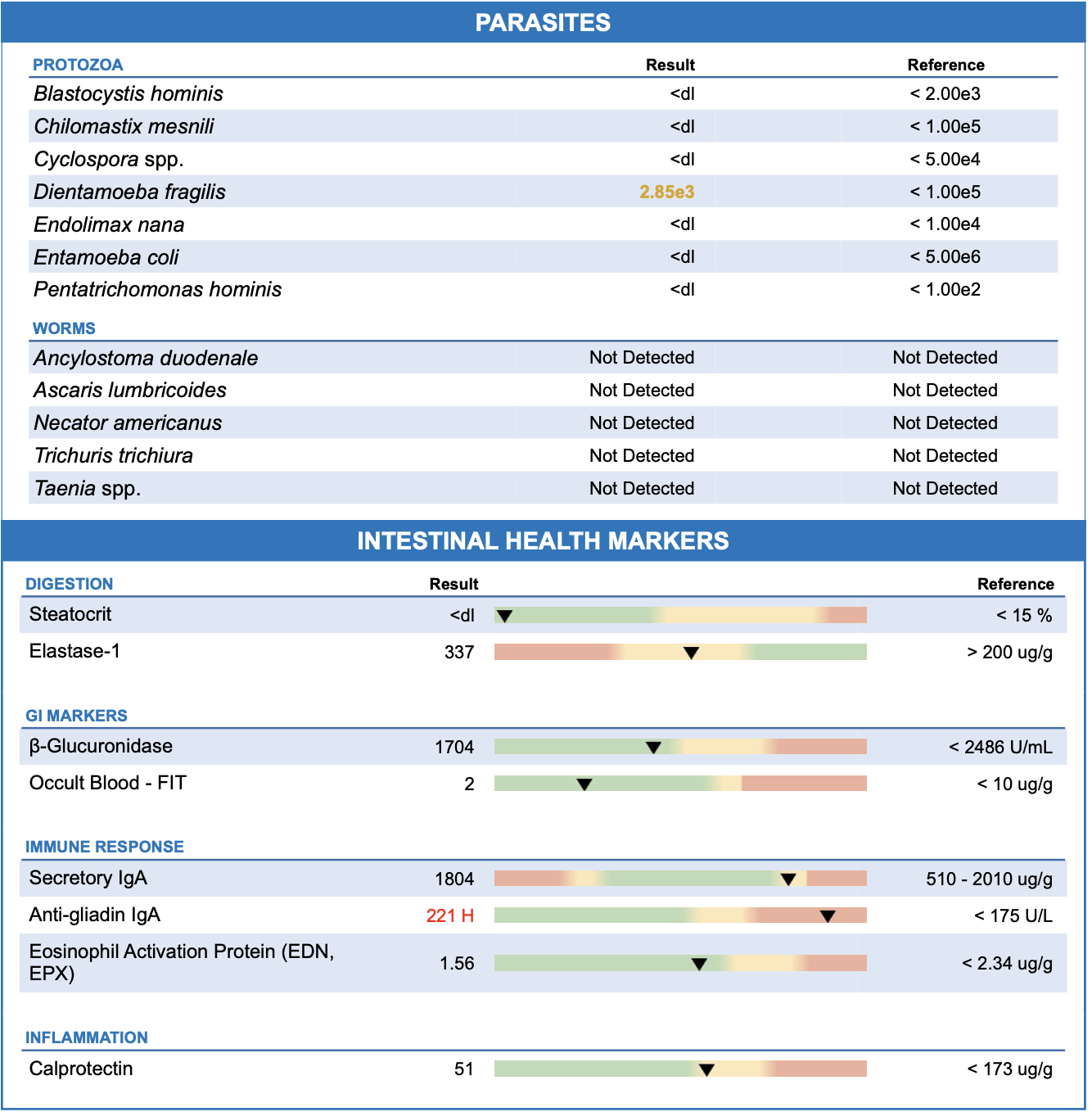
The GI-MAP is a comprehensive stool test that uses quantitative PCR technology to detect and measure DNA from bacteria, parasites, H. pylori, fungi, viruses, and other organisms. It also includes markers related to digestion, absorption, inflammation, and immune function.
This matters because the GI-MAP does not just tell us whether something is “present” or “absent.” It helps quantify what is present, which can make the results more clinically useful when creating a personalized plan.
What does the GI-MAP evaluate?
The GI-MAP is a comprehensive stool test that gives a detailed look at what’s happening inside your gut at a microbial and functional level. Rather than guessing, it helps us identify specific imbalances that may be contributing to your symptoms.
It evaluates:
-
Beneficial bacteria (commensal flora)
Opportunistic bacteria that can overgrow under stress or imbalance
-
Bacterial pathogens (e.g., Salmonella, E. coli strains)
Parasites (e.g., Giardia, Blastocystis)
Viruses
Yeast/fungal overgrowth (e.g., Candida)
-
Presence of H. pylori
Markers that indicate how aggressive or damaging it may be
-
Pancreatic elastase (enzyme production)
Markers of fat digestion
-
Calprotectin
Other markers that indicate irritation or inflammation in the gut
-
Secretory IgA (your gut’s immune defense)
-
Zonulin (marker associated with intestinal permeability)
Who may benefit from gut testing?
Gut testing may be helpful if you experience:
Chronic bloating or gas
Constipation, diarrhea, or alternating stools
Reflux or upper digestive symptoms
Food sensitivities or increasing food reactions
Acne, eczema, rosacea, and other skin conditions
Autoimmune conditions
Fatigue or brain fog
Unexplained inflammation
Symptoms that temporarily improve but keep coming back
Common conditions where gut testing can be helpful:
Irritable Bowel Syndrome (IBS)
Small Intestinal Bacterial Overgrowth (SIBO)
Inflammatory Bowel Disease (IBD)
Acid reflux / GERD
Hashimoto’s thyroiditis
Rheumatoid arthritis
Lupus
Acne
Eczema
Rosacea
Polycystic Ovary Syndrome (PCOS)
Endometriosis
Estrogen imbalance
Fertility challenges
Histamine intolerance
Mast Cell Activation Syndrome
Anxiety disorder
Depression