
Organic Acids Test (OAT)
A functional look at metabolism, gut health, and nutrient status
What are organic acids?
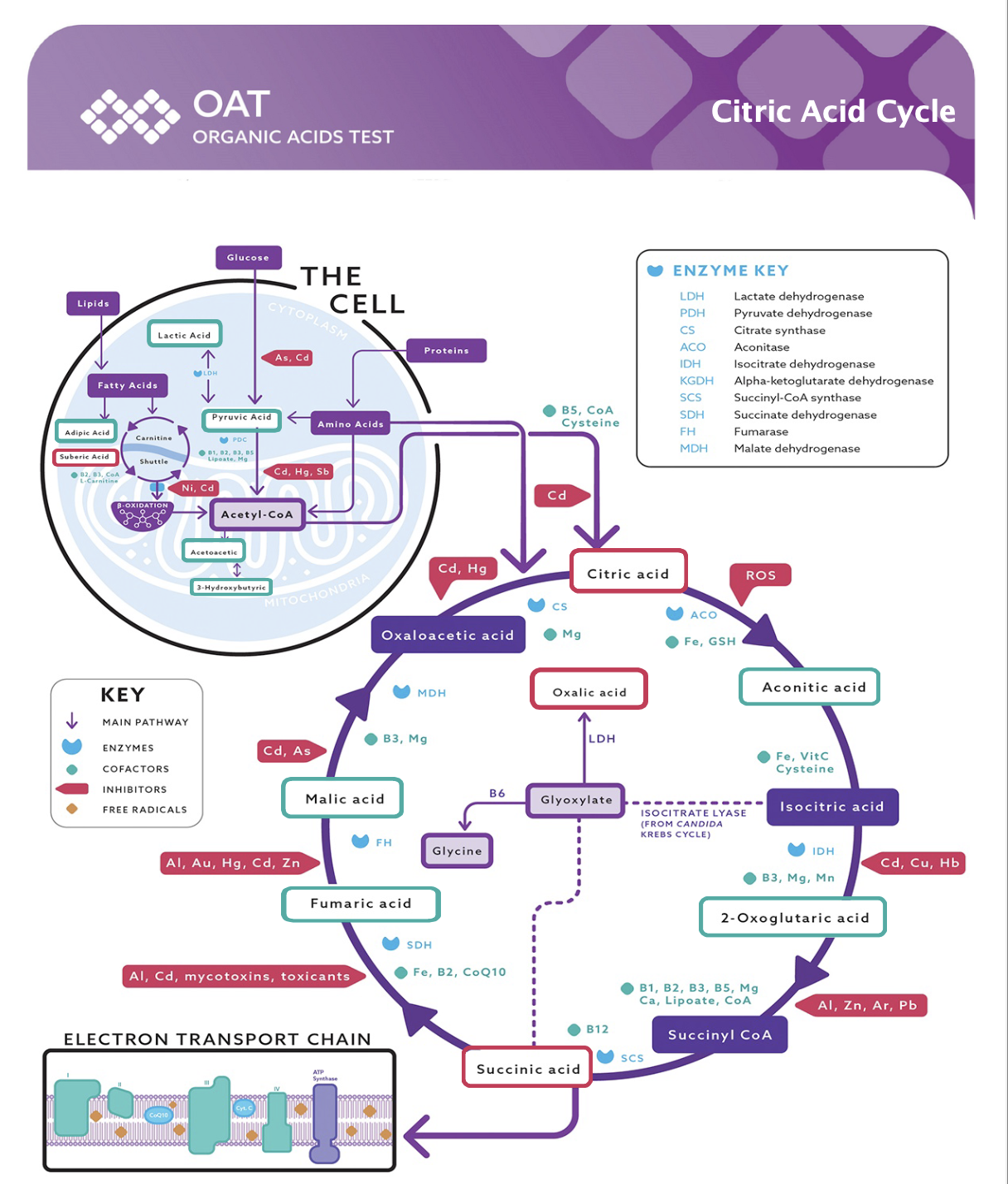
Organic acids are natural compounds your body produces as it carries out everyday functions like making energy, supporting digestion, and maintaining overall health. They are created by your own cells—as well as by bacteria and yeast in the gut—and are typically eliminated through the urine.
Because of this, organic acids can give us insight into how different systems in the body are functioning, including:
Energy production
Gut health and microbial balance
Detoxification processes
Mood and brain chemistry (neurotransmitters)
Vitamin and mineral use
When everything is working well, these compounds are produced and cleared in balanced amounts. But when the body is under stress—such as from nutrient gaps, gut imbalances, or environmental exposures—these patterns can shift.
By looking at these patterns, we can better understand where the body may need additional support and create a more personalized plan to help restore balance.
Why run an Organic Acids Test?
The Organic Acids Test (OAT) helps connect the dots between symptoms and what’s happening beneath the surface at a metabolic level. It allows for a more personalized, root-cause approach by highlighting how different systems in the body are functioning together, not in isolation.
Rather than guessing, this test helps guide targeted nutrition, lifestyle, and supplement interventions based on your unique biochemistry.
What does the OAT evaluate?
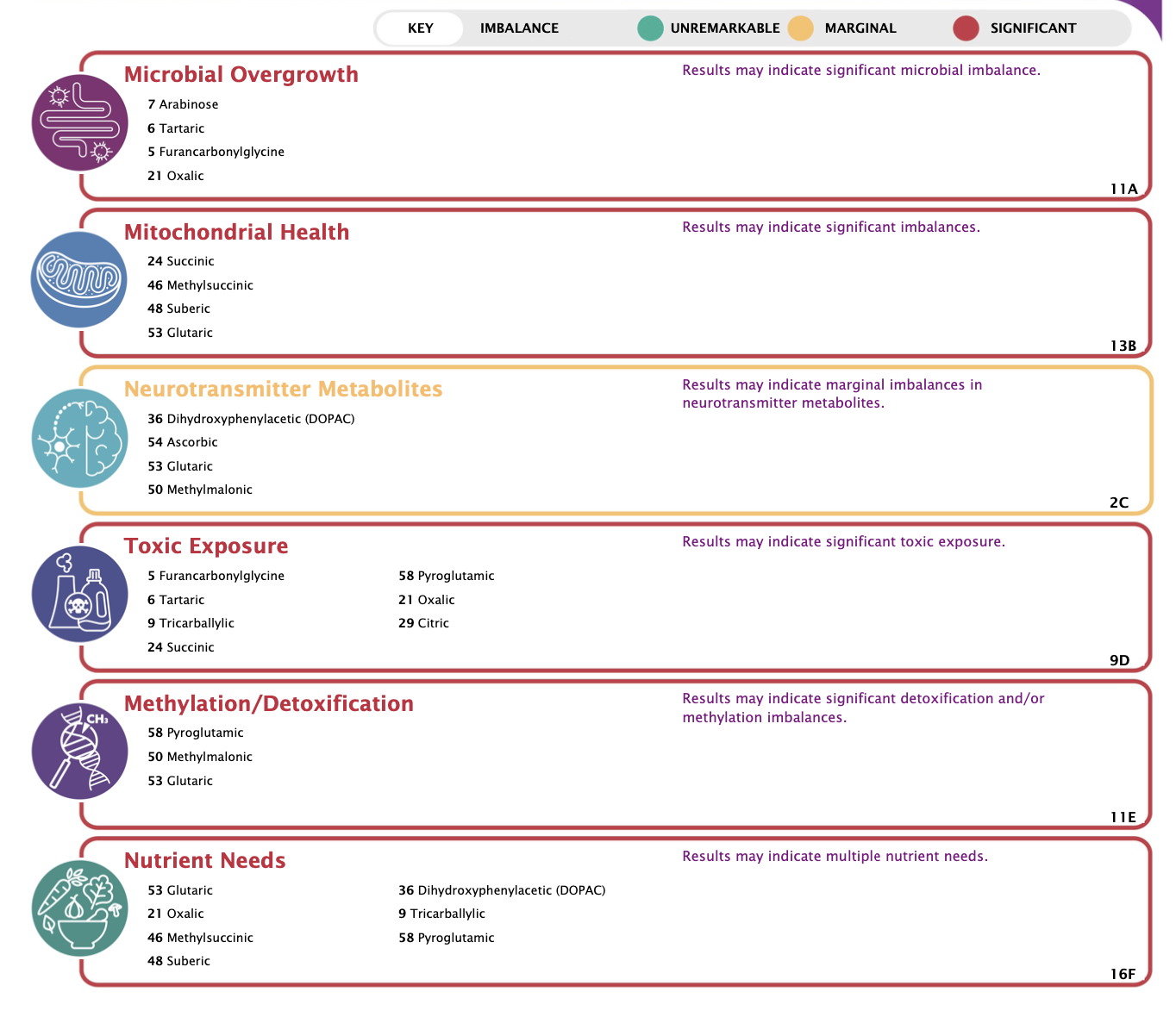
The test provides insight across several key areas of health, helping identify patterns of imbalance:
-
Evaluates markers associated with yeast, mold, bacteria, and other microbial activity in the gut, along with their metabolic byproducts.
-
Assesses how efficiently your body is converting carbohydrates, fats, and proteins into usable energy at the cellular level.
-
Provides insight into pathways related to mood, focus, and stress resilience, including metabolites connected to dopamine, serotonin, and norepinephrine/epinephrine.
-
Highlights how the body is processing and eliminating internal and external stressors, including the demand for antioxidants and detoxification support.
-
Looks at compounds involved in methylation, a key process that impacts hormone balance, detoxification, and overall cellular function
-
Identifies patterns that may suggest increased demand for specific vitamins and minerals, particularly B vitamins, antioxidants, and other key cofactors needed for optimal metabolism.
Who may benefit from the OAT?
Those with symptoms like:
Persistent fatigue or low energy
Digestive symptoms (bloating, gas, irregular bowel movements)
Mood concerns such as anxiety, low mood, or irritability
Brain fog, focus issues, or attention challenges
Hormonal imbalances or unexplained symptoms
Signs of nutrient deficiencies despite a “healthy” diet
Chronic inflammation or immune dysregulation
Common conditions where OAT can provide insight:
Attention and focus challenges (including ADHD patterns)
Autism spectrum-related concerns
Autoimmune conditions
Blood sugar dysregulation and insulin resistance
Chronic fatigue and burnout
Digestive disorders and gut imbalances
Fibromyalgia and chronic pain conditions
Mood disorders (anxiety, depression)
Neurological conditions and cognitive decline
Weight resistance or metabolic dysfunction
Suspected toxin exposure (environmental toxins, mold, heavy metals, tick-borne illness patterns)